
What Is Angioplasty?
An angioplasty, also known as percutaneous coronary intervention (PCI), is a minimally invasive procedure used to widen narrowed or blocked coronary arteries. These arteries supply oxygen-rich blood to the heart muscle.
Over time, fatty deposits known as plaque can build up inside the coronary arteries, reducing blood flow. When this happens, the heart may not receive enough oxygen during physical activity or even at rest, depending on the severity of the narrowing.
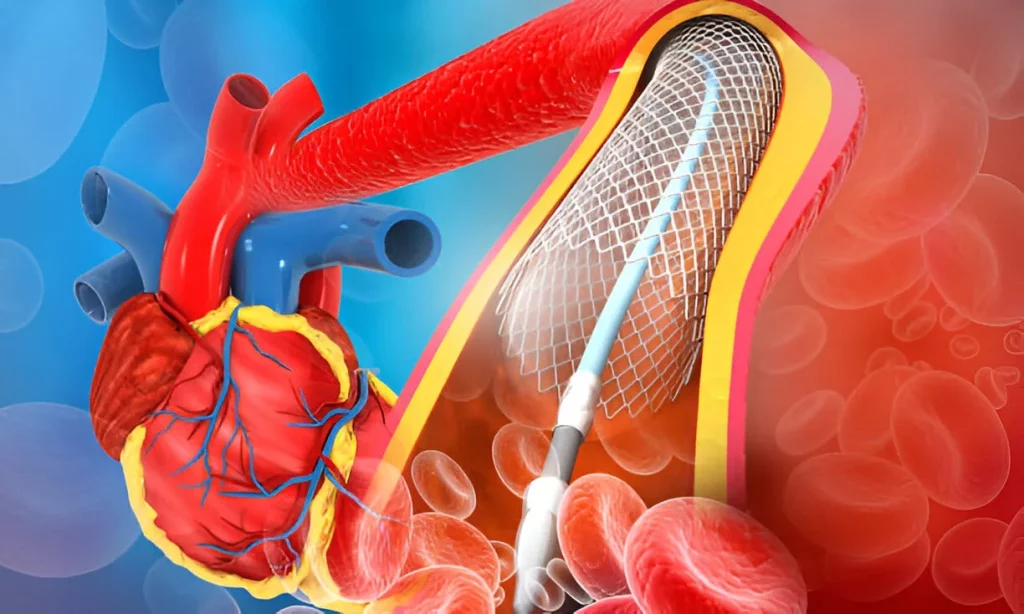
During an angioplasty, a cardiologist uses a small balloon to widen the narrowed artery. In most cases, a stent is also inserted to help keep the artery open and maintain blood flow.
Key Points
- Minimally invasive procedure to treat narrowed coronary arteries
- Often performed together with coronary angiography
- Usually involves placement of a coronary stent
- May help improve blood flow to the heart muscle
- Commonly used to treat coronary artery disease and certain heart attacks
Why Might I Need an Angioplasty?
An angioplasty may be recommended when one or more coronary arteries have become significantly narrowed or blocked, reducing blood flow to the heart.
Your cardiologist may suggest this procedure if investigations show that the narrowing is likely contributing to your symptoms or increasing your risk of complications.
Common reasons for angioplasty include:
- Chest pain (angina)
- Chest discomfort during physical activity
- Shortness of breath related to reduced blood flow to the heart
- Reduced exercise tolerance
- Abnormal results from heart investigations
- Coronary artery disease confirmed during coronary angiography
- Emergency treatment during certain types of heart attack
Whether angioplasty is appropriate depends on the location and severity of the narrowing, your symptoms, and your overall heart health.
What Is a Coronary Stent?
A coronary stent is a small mesh tube that is placed inside a narrowed coronary artery during an angioplasty procedure.
Once expanded, the stent remains inside the artery to help support the vessel walls and maintain blood flow.
Most modern stents are made from specialised metal alloys designed to remain permanently within the artery. Many are also drug-eluting stents, which slowly release medication to help reduce the risk of the artery narrowing again.
Your cardiologist will recommend the most suitable type of stent based on your clinical condition.
What Is the Difference Between Balloon Angioplasty and Stent Angioplasty?
The terms are closely related, but they describe different parts of the same procedure.
Balloon angioplasty uses a small inflatable balloon to widen the narrowed section of the artery. The balloon is then deflated and removed.
In most cases today, stent angioplasty is performed. After the balloon widens the artery, a stent is placed in the same location to help keep the artery open after the procedure.
For many patients, balloon angioplasty and stent implantation are performed during the same treatment.
What Happens During an Angioplasty?
It’s natural to have questions before any procedure. Understanding what happens can help you feel more prepared.
An angioplasty is usually performed in a cardiac catheterisation laboratory under local anaesthesia. Sedation may be offered if appropriate, but general anaesthesia is not usually required.
During the procedure:
- A small area at the wrist or groin is numbed with local anaesthetic.
- A thin tube called a catheter is inserted into an artery and guided towards the heart using X-ray imaging.
- Contrast dye is injected so the coronary arteries can be clearly seen.
- A fine wire is passed across the narrowed artery.
- A small balloon is inflated to widen the narrowed section.
- In most cases, a stent is expanded at the same location to support the artery.
- The balloon and other equipment are removed, leaving the stent in place.
The procedure usually takes around 30 minutes to two hours, depending on the complexity of the treatment.
What Are the Benefits of Angioplasty?
For suitable patients, angioplasty can improve blood flow through narrowed coronary arteries.
Depending on your condition, the procedure may help:
- Relieve symptoms such as angina
- Improve exercise tolerance
- Restore blood flow during certain types of heart attack
- Reduce the impact of reduced blood supply to the heart muscle
Angioplasty does not cure coronary artery disease. Ongoing management with medications, lifestyle modification, and regular medical follow-up remains an important part of long-term care.
What Are the Possible Risks?
Like all medical procedures, angioplasty carries potential risks, although serious complications are uncommon.
Possible risks include:
- Bleeding or bruising at the catheter insertion site
- Infection
- Allergic reaction to contrast dye
- Damage to the artery
- Blood clot formation
- Irregular heart rhythm (arrhythmia)
- Heart attack
- Stroke
Your cardiologist will discuss the potential benefits and risks based on your individual medical condition before recommending the procedure.
How Do I Prepare for an Angioplasty?
If your angioplasty is planned rather than performed as an emergency, your healthcare team will provide instructions before your admission.
Preparation may include:
- Fasting for a period before the procedure
- Reviewing your medications with your doctor
- Blood tests and other pre-procedure assessments
- Informing your healthcare team about allergies, kidney disease, or previous reactions to contrast dye
Most patients stay in hospital overnight for observation following the procedure.
What Is Recovery Like After an Angioplasty?
Recovery varies depending on your overall health and whether the procedure was planned or performed as an emergency.
After the procedure:
- Your heart rhythm and blood pressure will be monitored.
- You will usually remain in hospital overnight.
- Most people can return home the following day if there are no complications.
- Your doctor may advise avoiding heavy lifting and strenuous activities for about one week.
- A follow-up appointment is arranged to review your recovery and medications.
It is important to continue taking all prescribed medications and attend scheduled follow-up visits.
Can Coronary Artery Disease Return After an Angioplasty?
An angioplasty treats the narrowed section of an artery but does not remove the underlying process that causes coronary artery disease.
Continuing to manage cardiovascular risk factors remains important after the procedure.
Your cardiologist may recommend:
- Taking prescribed medications
- Controlling blood pressure, cholesterol, and diabetes
- Stopping smoking
- Following a heart-healthy diet
- Participating in regular physical activity when appropriate
- Attending regular follow-up appointments
These measures help support long-term cardiovascular health.
Frequently Asked Questions
1. Is angioplasty considered surgery?
Angioplasty is a minimally invasive procedure performed through a small catheter inserted into an artery. It does not require open-heart surgery.
2. Will I be awake during the procedure?
Yes. Most angioplasty procedures are performed under local anaesthesia. Sedation may be given to help you relax if appropriate.
3. How long will I stay in hospital?
Many patients stay overnight for observation and are discharged the following day if recovery is uncomplicated.
4. Will the stent stay in my body permanently?
Yes. A coronary stent is designed to remain inside the artery permanently to help support blood flow.
5. Can I return to normal activities after angioplasty?
Most people gradually resume their normal daily activities after recovery. Your cardiologist will advise you when it is appropriate to return to work, exercise, and other activities based on your individual condition.
Discuss Whether Angioplasty Is Appropriate for You
If you’ve been diagnosed with coronary artery disease or are experiencing symptoms such as chest pain, breathlessness, or reduced exercise tolerance, a cardiology assessment can help determine whether further investigations or procedures are appropriate.
At Apex Heart Clinic, Dr Daniel Yeo provides consultation, diagnostic assessment, and management for coronary artery disease, including coronary angiography, angioplasty, and coronary stent implantation when clinically indicated.