
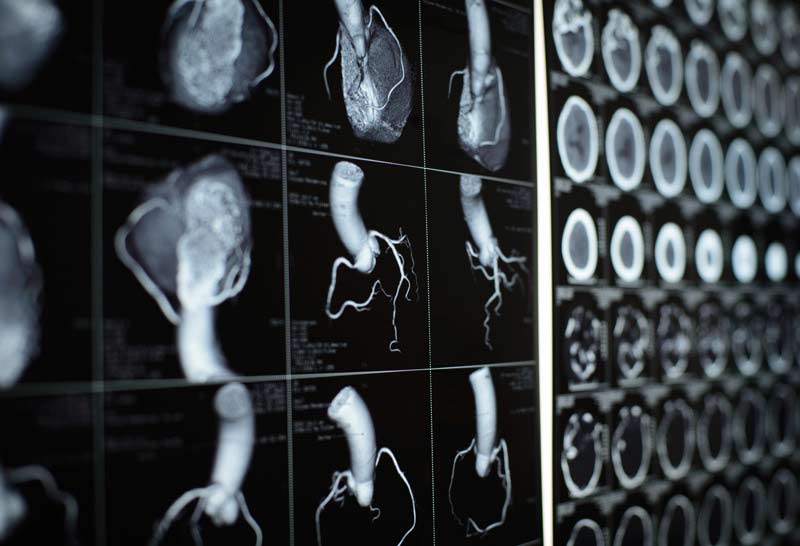
What Is a Cardiac CT Scan?
A Cardiac CT (Computed Tomography) Scan is an imaging test that uses X-rays and computer technology to produce detailed pictures of the heart and its blood vessels. One of its main uses is to assess the coronary arteries, which supply blood to the heart muscle.
Unlike a standard chest X-ray, a cardiac CT scan provides detailed cross-sectional images that can help your cardiologist evaluate the structure of the heart and detect changes in the coronary arteries.
Depending on your symptoms and medical history, your cardiologist may recommend a CT Coronary Angiogram, a specialised type of cardiac CT scan that uses contrast dye to provide detailed images of the coronary arteries.
Key Points
- Non-invasive imaging test of the heart and coronary arteries
- Produces detailed images using CT technology
- May help assess narrowing or plaque within the coronary arteries
- Often performed when investigating chest pain or evaluating cardiovascular risk
- Usually completed within a short period, although preparation may be required
Why Would I Need a Cardiac CT Scan?
If you’ve been experiencing symptoms such as chest discomfort or your doctor wants to assess your risk of coronary artery disease, a cardiac CT scan may provide additional information that cannot be obtained from a physical examination alone.
Your cardiologist may recommend this investigation to better understand the condition of your heart and blood vessels before deciding whether further evaluation is necessary.
A cardiac CT scan may be considered if you:
- Experience chest pain or chest discomfort
- Have symptoms that may suggest coronary artery disease
- Have multiple cardiovascular risk factors, such as diabetes, high blood pressure, or high cholesterol
- Have an abnormal result from another heart investigation
- Require further assessment of your coronary arteries
Not everyone with chest pain requires a cardiac CT scan. Your cardiologist will determine whether this investigation is appropriate based on your individual circumstances.
What Can a Cardiac CT Scan Detect?
A cardiac CT scan provides detailed images that may help identify structural changes in the heart and coronary arteries.
Depending on the type of scan performed, it may help assess:
- Narrowing of the coronary arteries
- Calcium deposits within the coronary arteries
- Plaque build-up that may increase the risk of coronary artery disease
- Certain structural abnormalities of the heart
- The anatomy of the major blood vessels connected to the heart
The findings are interpreted together with your symptoms, medical history, and other investigations.
What Is the Difference Between a Cardiac CT Scan and a CT Coronary Angiogram?
These terms are sometimes used interchangeably, but they are not exactly the same.
A Cardiac CT Scan refers broadly to CT imaging of the heart.
A CT Coronary Angiogram (CTCA) is a specialised cardiac CT examination that uses an intravenous contrast dye to produce detailed images of the coronary arteries. It allows your cardiologist to assess whether there is narrowing or plaque within these arteries.
Your cardiologist will recommend the most appropriate examination depending on the clinical question that needs to be answered.
What Happens During the Procedure?
Many people are concerned that a cardiac CT scan may be uncomfortable, but the procedure is generally straightforward.
Before the scan:
- A healthcare professional may place a small intravenous (IV) cannula in your arm if contrast dye is required.
- Your heart rate may be assessed, and in some cases, medication may be given to slow the heart rate to improve image quality.
During the scan:
- You will lie on a scanning table that moves through the CT scanner.
- You may be asked to hold your breath for a few seconds while images are taken.
- If contrast dye is used, you may briefly notice a warm sensation throughout your body or a metallic taste in your mouth.
The scan itself usually takes only a few minutes, although your total appointment may be longer due to preparation.
Do I Need to Prepare Before a Cardiac CT Scan?
Preparing for your scan helps ensure that high-quality images can be obtained.
Your doctor or the clinic may advise you to:
- Avoid caffeine before the scan, if instructed
- Follow fasting instructions if contrast dye will be used
- Continue or temporarily adjust certain medications as advised
- Inform the clinic if you have kidney disease, asthma, diabetes, or allergies to contrast dye
- Inform your doctor if you are pregnant or think you may be pregnant
The clinic will provide specific preparation instructions before your appointment.
Is a Cardiac CT Scan Safe?
A cardiac CT scan uses X-rays, which involve a small amount of radiation. Your doctor will only recommend the investigation if the expected clinical benefit outweighs the potential risks.
If contrast dye is used, it is generally well tolerated. However, some individuals may have allergies to the dye or underlying kidney conditions that require additional precautions.
Before your scan, your healthcare team will review your medical history to ensure the investigation is appropriate for you.
What Happens After the Scan?
Once the scan has been completed, most people can return to their normal daily activities.
The images are reviewed by a radiologist and your cardiologist, who will interpret the findings in the context of your symptoms and medical history.
During your follow-up consultation, your cardiologist will explain the results and discuss whether any additional investigations, monitoring, or treatment are appropriate.
When Should You See a Cardiologist?
Chest discomfort does not always indicate heart disease, but it should not be ignored—particularly if it is persistent, occurs during physical activity, or is associated with other symptoms.
You should consider seeing a cardiologist if you experience:
- Chest pain or pressure
- Shortness of breath during activity
- Unexplained fatigue with exertion
- Palpitations
- Multiple cardiovascular risk factors
- A family history of coronary artery disease together with concerning symptoms
If you experience sudden severe chest pain, collapse, or symptoms that may suggest a heart attack, seek immediate emergency medical attention.
Frequently Asked Questions
1. Is a cardiac CT scan painful?
No. The scan itself is painless. If contrast dye is required, you may briefly notice a warm sensation or metallic taste during the injection.
2. How long does the scan take?
The scan itself usually takes only a few minutes, although the overall appointment may take longer because of preparation and monitoring.
3. Do I need contrast dye?
Some cardiac CT scans, including CT coronary angiograms, require intravenous contrast dye. Your cardiologist will determine whether contrast is needed.
4. Can a cardiac CT scan detect blocked arteries?
A CT coronary angiogram can help assess narrowing or plaque within the coronary arteries. Your cardiologist will explain what the findings mean in the context of your overall assessment.
5. Will I be able to go home after the scan?
In most cases, yes. Unless you have been given specific instructions, you can usually return home after the procedure.
Discuss Whether a Cardiac CT Scan Is Right for You
A cardiac CT scan can provide detailed information about the heart and coronary arteries when further evaluation is appropriate. Whether this investigation is suitable depends on your symptoms, medical history, and cardiovascular risk factors.
At Apex Heart Clinic, Dr Daniel Yeo provides cardiology consultations and may recommend a Cardiac CT Scan or CT Coronary Angiogram as part of your cardiac assessment when clinically indicated.