
What Is an Echocardiogram?
An echocardiogram, also known as echocardiography or a heart ultrasound, is a non-invasive imaging test that uses sound waves to create moving images of your heart.
Unlike an ECG, which records the heart’s electrical activity, an echocardiogram allows your cardiologist to see how the heart is structured and how well it is functioning. It can show the size of the heart, how the valves open and close, and how effectively the heart pumps blood.
Because it does not involve radiation, echocardiography is widely used to assess a variety of heart conditions and may be recommended as part of a routine cardiac evaluation.
Key Points
- Uses ultrasound to create real-time images of the heart
- Non-invasive and does not use radiation
- Assesses heart chambers, valves, and pumping function
- Helps evaluate symptoms such as chest pain, breathlessness, or palpitations
- Usually completed within 30 to 60 minutes
Why Would I Need an Echocardiogram?
If you’ve been experiencing symptoms that may be related to your heart, an echocardiogram can provide valuable information that isn’t available from a physical examination alone.
Your cardiologist may recommend this test to better understand how your heart is functioning or to investigate findings from another examination, such as an ECG.
An echocardiogram may be recommended if you have:
- Chest pain or chest discomfort
- Shortness of breath
- Palpitations
- Dizziness or fainting
- A heart murmur
- Swollen legs or ankles
- High blood pressure affecting the heart
- A known heart condition requiring follow-up
It may also be performed before certain procedures or as part of a comprehensive heart assessment.
What Can an Echocardiogram Show?
One of the strengths of echocardiography is that it provides detailed, real-time images of the heart while it is beating.
An echocardiogram may help assess:
- The size and shape of the heart
- How well the heart muscle pumps blood
- Heart valve structure and function
- Blood flow through the heart
- Fluid surrounding the heart (pericardial effusion)
- Changes in the heart muscle following a heart attack
- Certain congenital (present from birth) heart abnormalities
Your cardiologist will interpret these findings together with your symptoms, medical history, and other investigations.
What Is the Difference Between an ECG and an Echocardiogram?
These two tests are often performed together, but they provide different information.
An ECG (electrocardiogram) records the electrical signals that control your heartbeat and can help identify heart rhythm abnormalities.
An echocardiogram uses ultrasound to create images of the heart, allowing your doctor to evaluate its structure, valves, and pumping function.
Because they assess different aspects of heart health, your cardiologist may recommend both tests during your evaluation.
What Happens During an Echocardiogram?
Many people are surprised by how straightforward an echocardiogram is. The procedure is painless and does not require needles or injections in most cases.
During the examination:
- You will lie comfortably on an examination bed.
- Small sticky electrodes may be placed on your chest to monitor your heart rhythm during the scan.
- A clear ultrasound gel is applied to the chest.
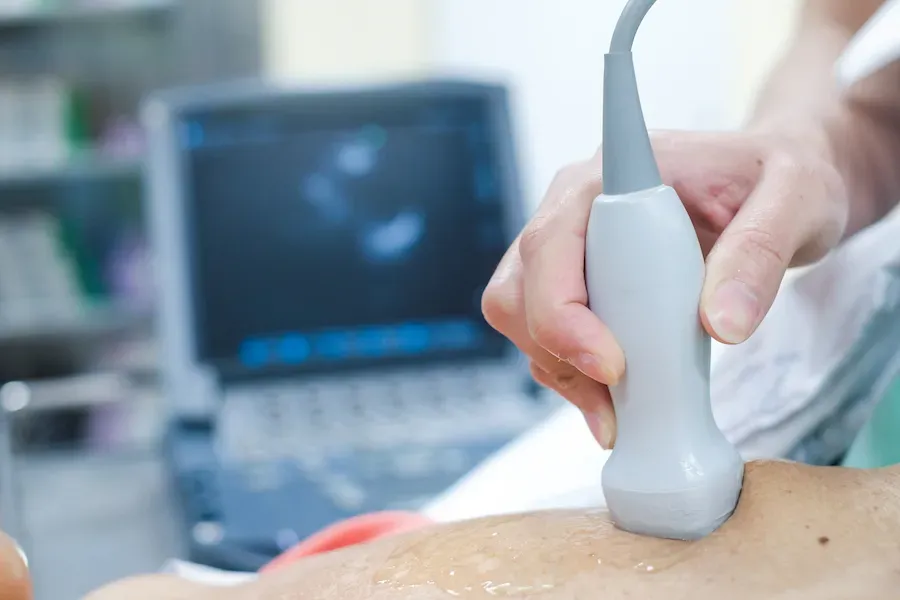
- A handheld ultrasound probe is gently moved across different areas of the chest to capture images of the heart.
- You may be asked to change position or briefly hold your breath while images are obtained.
The examination usually takes between 30 and 60 minutes, depending on the information that needs to be collected.
Do I Need to Prepare Before an Echocardiogram?
For a standard transthoracic echocardiogram, very little preparation is required.
Before your appointment, you may be advised to:
- Wear comfortable clothing
- Bring a list of your current medications
- Continue taking your prescribed medicines unless instructed otherwise
If you are scheduled for a specialised echocardiogram, such as a stress echocardiogram or transoesophageal echocardiogram (TOE), your cardiologist will provide additional preparation instructions.
Is an Echocardiogram Safe?
Yes. Echocardiography is considered a safe and commonly performed investigation.
The test uses high-frequency sound waves, not radiation, to create images of the heart.
Most people experience no discomfort apart from the slight pressure of the ultrasound probe against the chest. There are generally no restrictions after a standard echocardiogram, and you can usually return to your normal activities immediately.
What Happens After the Test?
After the echocardiogram is completed, the images are reviewed by your cardiologist.
Rather than looking at the scan in isolation, your doctor considers the findings together with your symptoms, medical history, physical examination, and any other heart investigations.
During your follow-up consultation, your cardiologist will explain the results, answer your questions, and discuss whether any additional investigations or management are appropriate.
When Should You See a Cardiologist?
Symptoms affecting the heart can have many possible causes. An echocardiogram is one of several investigations that may help identify the reason for your symptoms.
You should consider arranging a cardiology consultation if you experience:
- Persistent chest discomfort
- Shortness of breath during everyday activities
- Frequent palpitations
- Dizziness or fainting episodes
- Swelling of the legs or ankles
- A newly detected heart murmur
- A family history of certain heart conditions together with concerning symptoms
If you experience severe chest pain, sudden collapse, or symptoms suggestive of a heart attack, seek immediate emergency medical care.
Frequently Asked Questions
1. Is an echocardiogram painful?
No. A standard echocardiogram is painless and non-invasive. Most people only feel slight pressure from the ultrasound probe during the examination.
2. How long does an echocardiogram take?
Most examinations take between 30 and 60 minutes, although the exact duration depends on the type of study being performed.
3. Does an echocardiogram use radiation?
No. Echocardiography uses ultrasound (sound waves) and does not involve exposure to radiation.
4. Can an echocardiogram detect blocked arteries?
An echocardiogram evaluates the heart’s structure and function but does not directly visualise the coronary arteries. Other investigations, such as a CT Coronary Angiogram or coronary angiography, may be recommended if coronary artery disease is suspected.
5. Can I drive home after the test?
Yes. After a standard echocardiogram, you can usually resume your normal activities immediately unless your doctor has advised otherwise.
Book a Consultation to Assess Your Heart Function
An echocardiogram provides detailed information about how your heart is working and may be recommended if you have symptoms, cardiovascular risk factors, or require further cardiac assessment.
At Apex Heart Clinic, Dr Daniel Yeo provides cardiology consultations and performs echocardiography as part of the evaluation of a range of heart conditions when clinically appropriate.