
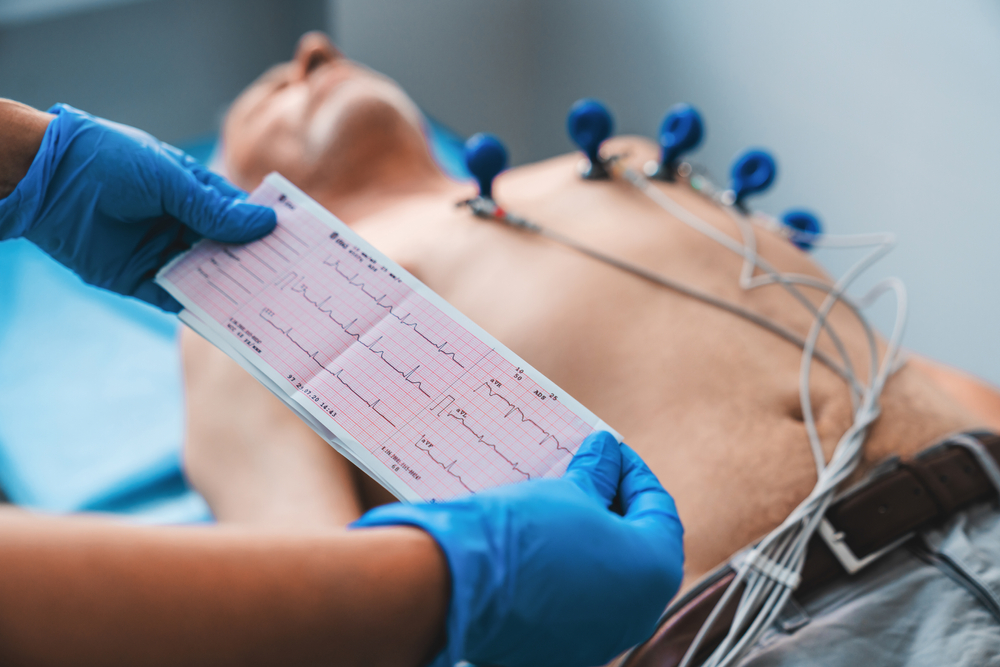
What Is a 12-Lead Electrocardiogram (ECG)?
A 12-lead electrocardiogram (ECG) is one of the most commonly performed tests used to assess the electrical activity of the heart. It is a quick, non-invasive investigation that records the heart’s rhythm and electrical signals using electrodes placed on the chest, arms, and legs.
The test provides information that may help your cardiologist identify rhythm disturbances, evidence of reduced blood flow to the heart muscle, previous heart attacks, or other cardiac conditions. It is often one of the first investigations performed when evaluating heart-related symptoms.
Key Points
- Non-invasive and painless
- Usually completed within a few minutes
- Records the heart’s electrical activity from 12 different perspectives
- Commonly used to investigate chest pain, palpitations, dizziness, or shortness of breath
- May also be performed as part of a heart health assessment before certain medical procedures or treatments
Why Would Someone Need a 12-Lead ECG?
A 12-lead ECG may be recommended for a variety of reasons depending on your symptoms, medical history, or risk factors.
Your doctor may advise an ECG if you experience symptoms that could be related to the heart or if further assessment is needed following a routine medical examination.
Common reasons include:
- Chest discomfort or chest pain
- Palpitations or an irregular heartbeat
- Dizziness or fainting episodes
- Shortness of breath
- High blood pressure
- Known heart disease
- Monitoring after certain heart procedures
- Assessment before surgery or selected medical treatments
An ECG may also form part of a broader cardiac evaluation alongside other investigations when appropriate.
What Can a 12-Lead ECG Detect?
While an ECG does not diagnose every heart condition on its own, it can provide valuable information about how the heart is functioning at the time of the test.
It may help identify:
- Irregular heart rhythms (arrhythmias)
- Fast or slow heart rates
- Signs of a previous heart attack
- Evidence suggesting an ongoing heart attack
- Changes that may indicate reduced blood flow to the heart muscle
- Enlargement of parts of the heart
- Certain electrolyte abnormalities
- Effects of some medications on the heart’s electrical activity
If abnormalities are detected, your cardiologist may recommend additional investigations to better understand the findings.
What Happens During a 12-Lead ECG?
The procedure is straightforward and usually takes only a few minutes.
During the test:
- You will be asked to lie comfortably on an examination couch.
- Small adhesive electrodes will be attached to your chest, arms, and legs.
- These electrodes are connected to the ECG machine.
- You will be asked to remain still and breathe normally while the recording is taken.
- The machine records the electrical activity of your heart without delivering any electricity into your body.
Once the recording is complete, the electrodes are removed and you can return to your normal activities immediately.
Do I Need to Prepare Before an ECG?
In most cases, little preparation is required.
Before your appointment, you may be advised to:
- Wear comfortable clothing that allows access to the chest area
- Avoid applying lotions or oils to the chest on the day of the test, as these can affect electrode attachment
- Inform your doctor about any medications you are taking
- Let your healthcare team know if you have a pacemaker or other implanted cardiac device
Your doctor will advise you if any additional preparation is needed based on your individual circumstances.
Is a 12-Lead ECG Painful or Safe?
A standard ECG is considered a safe and non-invasive investigation.
The electrodes simply detect electrical signals produced naturally by the heart. They do not deliver electrical current into the body.
Some people may notice mild discomfort when the adhesive pads are removed, but the test itself is generally painless.
Can an ECG Detect Every Heart Problem?
An ECG is an important diagnostic tool, but it does have limitations.
Some heart conditions may not produce changes on an ECG, particularly if symptoms are not occurring during the recording. In these situations, your cardiologist may recommend additional investigations such as:
- Echocardiography
- Treadmill stress testing
- 24-hour ECG (Holter) monitoring
- Cardiac CT
- Other cardiac imaging or investigations where appropriate
The most suitable tests depend on your symptoms, examination findings, and medical history.
When Should You See a Cardiologist?
If you are experiencing symptoms that may be related to the heart, it is important to seek medical assessment rather than relying on an ECG alone.
You should arrange a medical consultation if you experience:
- Persistent or recurrent chest pain
- Frequent palpitations
- Unexplained dizziness or fainting
- Breathlessness with minimal activity
- New or worsening exercise intolerance
- A family history of certain inherited heart conditions together with concerning symptoms
If you experience severe chest pain, sudden collapse, or symptoms suggestive of a medical emergency, seek immediate emergency medical care.
Frequently Asked Questions
1. How long does a 12-lead ECG take?
The recording itself usually takes only a few minutes. The overall appointment time may vary depending on your consultation and any additional assessments.
2. Do I need to fast before an ECG?
No. Fasting is generally not required unless your doctor has provided different instructions.
3. Can I exercise before my ECG?
Routine daily activities are usually acceptable. If specific preparation is required, your doctor will advise you before the appointment.
4. Will the ECG tell me if I have blocked arteries?
An ECG can sometimes show changes that suggest reduced blood flow or previous heart damage, but it cannot directly confirm whether the coronary arteries are blocked. Additional tests may be required.
5. If my ECG is normal, does that mean my heart is healthy?
Not necessarily. A normal ECG does not exclude every heart condition. Your doctor will interpret the ECG together with your symptoms, examination findings, medical history, and any other investigations that may be appropriate.
Book a Consultation to Discuss Your Heart Health
If you have symptoms such as chest discomfort, palpitations, dizziness, or shortness of breath, or if you have been advised to undergo a cardiac evaluation, a consultation with a cardiologist can help determine whether a 12-lead electrocardiogram (ECG) or other investigations are appropriate for your situation.
At Apex Heart Clinic, Dr Daniel Yeo provides cardiology consultation and assessment for a range of heart-related conditions. Where indicated, diagnostic tests such as a 12-lead ECG may be arranged as part of your evaluation.