
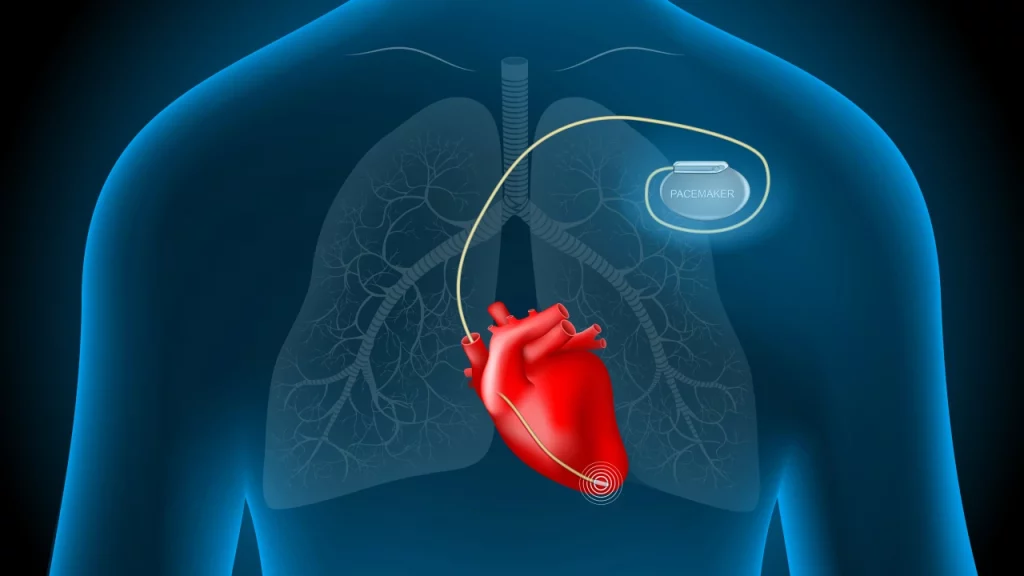
What Is a Pacemaker or Cardiac Device?
Your heart has its own electrical system that controls how fast and how regularly it beats. When this electrical system does not work properly, the heart may beat too slowly, too quickly, or in an uncoordinated way, making it less effective at pumping blood around the body.
A pacemaker is a small electronic device implanted beneath the skin, usually below the collarbone, to help regulate the heartbeat. It monitors the heart’s rhythm and sends small electrical impulses when needed to help maintain an appropriate heart rate.
For some people with more complex heart rhythm disorders or heart failure, other types of cardiac devices may be recommended, such as an implantable cardioverter-defibrillator (ICD) or a cardiac resynchronisation therapy (CRT) device.
Key Points
- Pacemakers help regulate slow or abnormal heart rhythms.
- Cardiac devices are implanted beneath the skin and connected to the heart with thin wires (leads).
- Different devices are used for different heart conditions.
- Implantation is usually performed under local anaesthesia with sedation when appropriate.
- Regular follow-up is required to monitor the device and your heart rhythm.
Why Might I Need a Pacemaker or Cardiac Device?
If your heart beats too slowly or the electrical signals within the heart are disrupted, your body may not receive enough blood to meet its needs. This can affect everyday activities and, in some cases, increase the risk of complications.
Your cardiologist may recommend a pacemaker or another cardiac device if investigations show that your symptoms are caused by a heart rhythm disorder.
Common reasons include:
- A persistently slow heart rate (bradycardia)
- Episodes of fainting or near-fainting related to heart rhythm problems
- Certain heart rhythm disorders (arrhythmias)
- Heart block (interruption of the heart’s electrical signals)
- Selected patients with heart failure who may benefit from cardiac resynchronisation therapy (CRT)
- Some patients at increased risk of life-threatening heart rhythm abnormalities who may require an implantable cardioverter-defibrillator (ICD)
The type of device recommended depends on your diagnosis and overall heart health.
What Types of Cardiac Devices Are Available?
Not all cardiac devices perform the same function. Your cardiologist will recommend the most appropriate device for your condition.
Single-Chamber Pacemaker
A single-chamber pacemaker usually stimulates one chamber of the heart, most commonly the right ventricle, to maintain an appropriate heart rate.
Dual-Chamber Pacemaker
A dual-chamber pacemaker coordinates electrical signals between the right atrium and right ventricle, helping maintain the normal timing of the heartbeat.
Cardiac Resynchronisation Therapy (CRT)
A CRT device, sometimes called a biventricular pacemaker, coordinates the contraction of both ventricles to improve the efficiency of the heart’s pumping action in selected patients with heart failure.
Implantable Cardioverter-Defibrillator (ICD)
An ICD continuously monitors the heart rhythm. If it detects certain serious rhythm disturbances, it can deliver electrical therapy to help restore a normal heartbeat.
Your cardiologist will explain which device is appropriate for your diagnosis and why it has been recommended.
What Happens During Pacemaker Implantation?
Many people are understandably anxious about having a cardiac device implanted. The procedure is commonly performed and is designed to be as comfortable as possible.
During the procedure:
- The skin below the collarbone is cleaned and numbed with local anaesthetic.
- A small incision is made to create a space for the device.
- One or more thin leads are guided through a vein into the heart using X-ray guidance.
- The leads are connected to the pacemaker or cardiac device.
- The device is tested to ensure it is functioning correctly.
- The incision is closed with stitches.
Most procedures are performed under local anaesthesia, and sedation may be provided if appropriate. General anaesthesia is not usually required.
What Are the Benefits of a Pacemaker?
A pacemaker or cardiac device is designed to support the heart’s electrical system when it is no longer functioning normally.
Depending on your condition, the device may help:
- Maintain a more consistent heart rhythm
- Reduce symptoms caused by a slow heartbeat
- Improve blood circulation
- Reduce episodes of dizziness or fainting
- Improve exercise tolerance for some patients
- Support selected patients with heart failure or complex rhythm disorders
The expected benefits depend on the underlying heart condition and the type of device implanted.
What Are the Possible Risks?
Like any medical procedure, pacemaker implantation carries potential risks, although serious complications are uncommon.
Possible risks include:
- Infection at the implantation site
- Bleeding or bruising
- Swelling around the device
- Blood vessel injury
- Blood clot formation
- Damage to nearby nerves
- Collapsed lung (pneumothorax)
- Blood collecting around the lung (haemothorax)
- Movement of the leads requiring repositioning
- Rarely, perforation of the heart muscle
Before recommending implantation, your cardiologist will discuss the potential benefits and risks based on your individual medical condition.
What Is Recovery Like After Pacemaker Implantation?
Recovery is usually gradual, and most people remain in hospital for observation while the device is checked and programmed.
After the procedure, your doctor may advise you to:
- Avoid lifting the arm on the side of the implant above shoulder height for a period of time
- Avoid heavy lifting or strenuous upper-body activity for several weeks
- Keep the incision clean and dry while it heals
- Attend scheduled follow-up appointments for device checks
Your cardiologist will provide individual guidance based on the type of device implanted and your recovery.
Can I Live Normally With a Pacemaker?
Most people return to their normal daily activities after recovering from pacemaker implantation.
There are, however, a few practical precautions to keep in mind.
Mobile Phones
Keep your mobile phone at least 15 cm (6 inches) away from the pacemaker. Avoid carrying it in a shirt pocket directly over the device, and use the ear on the opposite side when making calls.
Security Screening
Airport security systems are generally safe, although the device may trigger metal detectors. Carrying your pacemaker identification card can help during security screening.
Medical Procedures
Always tell your doctor, dentist, or other healthcare professionals that you have a pacemaker or cardiac device before undergoing medical treatment. Some medical equipment may require special precautions depending on the type of device you have.
Regular Device Checks
Your pacemaker should be checked periodically to ensure it continues to function as intended. Your cardiologist will advise how often these reviews are needed.
The battery life of most pacemakers ranges from 5 to 15 years, depending on the type of device and how frequently it is used. When the battery approaches the end of its lifespan, the pulse generator can usually be replaced through a planned procedure.
When Should You See a Cardiologist?
Symptoms caused by abnormal heart rhythms can have many different causes. If they occur repeatedly or interfere with your daily activities, they should be assessed.
You should consider seeing a cardiologist if you experience:
- Persistent dizziness
- Fainting or blackouts
- A slow heartbeat
- Palpitations
- Unexplained fatigue
- Shortness of breath
- Reduced exercise tolerance
- Heart failure symptoms together with rhythm abnormalities
Seek immediate emergency medical attention if you experience severe chest pain, collapse, or loss of consciousness.
Frequently Asked Questions
1. Will I be awake during pacemaker implantation?
Yes. Most procedures are performed under local anaesthesia, and sedation may be provided to help you relax if appropriate.
2. How long does a pacemaker last?
The battery of most pacemakers lasts approximately 5 to 15 years, depending on the type of device and how often it is used. Your cardiologist will monitor the battery during routine follow-up visits.
3. Can I exercise after getting a pacemaker?
Most people can gradually return to physical activity after recovery. Your cardiologist will advise when it is appropriate to resume exercise based on your condition and the type of device implanted.
4. Will I be able to travel?
Yes. Many people with pacemakers continue to travel, including by air. Carry your pacemaker identification card and inform airport security staff if necessary.
5. How often will my pacemaker need to be checked?
Regular follow-up is important. Device checks are commonly scheduled every 3 to 6 months, although the timing may vary depending on your device and clinical condition.
Book a Consultation to Discuss Your Heart Rhythm
If you’ve been experiencing dizziness, fainting, a slow heartbeat, palpitations, or symptoms related to heart rhythm disorders, a cardiology assessment can help determine whether further investigations or a cardiac device may be appropriate.
At Apex Heart Clinic, Dr Daniel Yeo provides consultation, diagnostic evaluation, and management for heart rhythm disorders, including assessment for pacemaker and cardiac device implantation when clinically indicated. Ongoing follow-up is provided to monitor both your heart rhythm and device function.
Book an appointment to discuss your symptoms and whether a pacemaker or other cardiac device may be appropriate for your condition.