
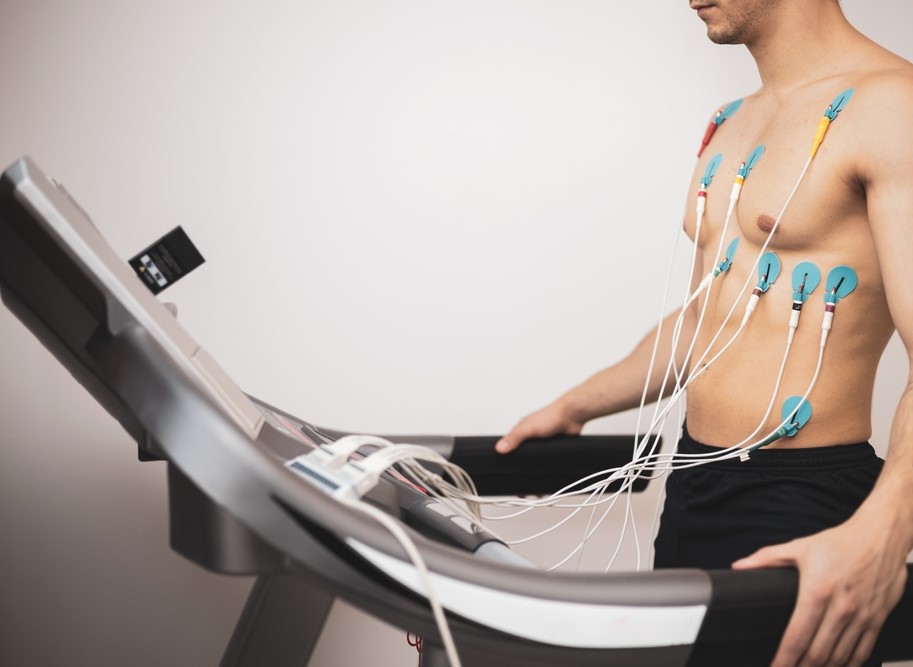
What Is a Treadmill Stress Test?
A treadmill stress test, also known as an exercise stress test, is a diagnostic test that assesses how your heart responds to physical activity.
While your heart works harder during exercise, it requires more oxygen-rich blood. Monitoring your heart during exercise can help your cardiologist identify changes that may not be present when you are resting.
During the test, you will walk on a treadmill while your heart rhythm, heart rate, blood pressure, and symptoms are monitored. The speed and incline of the treadmill gradually increase, allowing your healthcare team to evaluate how your heart performs under increasing levels of activity.
Key Points
- Evaluates how the heart responds during exercise
- Monitors heart rhythm, heart rate, and blood pressure
- May help investigate chest pain, breathlessness, or reduced exercise tolerance
- Non-invasive and commonly performed in an outpatient setting
- Usually completed within 30 to 60 minutes, including preparation and recovery
Why Would I Need a Treadmill Stress Test?
Some heart conditions only become apparent when the heart is working harder. If you’ve noticed symptoms during physical activity but not while resting, a treadmill stress test may provide useful information.
Your cardiologist may recommend this test to assess your symptoms, evaluate your exercise capacity, or investigate possible heart disease.
A treadmill stress test may be considered if you have:
- Chest pain or discomfort during activity
- Shortness of breath with exercise
- Reduced exercise tolerance
- Palpitations that occur during physical activity
- A need for further evaluation following another heart test
- Known heart disease requiring follow-up
- An assessment before beginning certain exercise programmes, when clinically appropriate
Your cardiologist will determine whether this test is suitable based on your symptoms, medical history, and overall health.
What Can a Treadmill Stress Test Show?
A treadmill stress test provides information about how your heart performs when your body’s demand for oxygen increases.
The test may help assess:
- Changes that suggest reduced blood flow to the heart muscle during exercise
- Exercise-related heart rhythm abnormalities (arrhythmias)
- Heart rate response to exercise
- Blood pressure response during physical activity
- Overall exercise capacity
- Symptoms that occur during exertion
The results are interpreted together with your medical history, physical examination, and any other investigations that may have been performed.
What Happens During the Test?
Many people are unsure what to expect before their first treadmill stress test. The procedure is carefully supervised, and your condition is monitored throughout.
During the test:
- Small adhesive electrodes are placed on your chest to monitor your heart rhythm.
- A blood pressure cuff is placed on your arm.
- You begin walking on the treadmill at a comfortable pace.
- The treadmill gradually increases in speed and incline every few minutes.
- Your heart rhythm, blood pressure, heart rate, and symptoms are continuously monitored.
The test may be stopped if:
- You reach the target heart rate.
- You become too tired to continue.
- You develop symptoms that require the test to end.
- Your cardiologist or healthcare team determines that sufficient information has been obtained.
After the exercise portion, your heart rhythm and blood pressure will continue to be monitored during a short recovery period.
Do I Need to Prepare Before a Treadmill Stress Test?
Preparing for your appointment can help ensure the test is completed safely and comfortably.
Before your appointment, you may be advised to:
- Wear comfortable clothing suitable for exercise
- Wear walking or running shoes
- Avoid heavy meals immediately before the test
- Avoid caffeine if instructed by your doctor
- Bring a list of your current medications
- Ask your doctor whether any medications should be adjusted before the test
The clinic will provide specific instructions if any preparation is required.
Is a Treadmill Stress Test Safe?
For most people, a treadmill stress test is considered a safe procedure when performed under medical supervision.
Throughout the examination, your heart rhythm, blood pressure, and symptoms are monitored by trained healthcare professionals. The test can be stopped at any time if you feel unwell or if your healthcare team identifies changes that require further assessment.
Before recommending the test, your cardiologist will consider whether it is appropriate for your individual health condition.
What Happens After the Test?
Once the recovery period is complete, you can usually return to your normal daily activities unless advised otherwise.
The information collected during the test is reviewed by your cardiologist alongside your symptoms, medical history, and results from any other investigations.
Your cardiologist will explain the findings during your consultation and discuss whether additional tests, monitoring, or treatment are appropriate.
When Should You See a Cardiologist?
Experiencing symptoms during physical activity should not be ignored, especially if they occur repeatedly or limit your ability to exercise.
You should consider seeing a cardiologist if you experience:
- Chest pain during exercise
- Shortness of breath that is out of proportion to your activity
- Palpitations triggered by exercise
- Dizziness or light-headedness during physical activity
- Reduced exercise tolerance without a clear explanation
- Multiple cardiovascular risk factors together with symptoms
If you experience sudden severe chest pain, collapse, or symptoms that may indicate a heart attack, seek immediate emergency medical attention.
Frequently Asked Questions
1. Is a treadmill stress test painful?
No. The test itself is not painful, although you may feel tired as the exercise intensity increases, similar to a brisk workout.
2. How long does the test take?
The exercise portion usually lasts around 10 to 15 minutes, while the entire appointment, including preparation and recovery, typically takes between 30 and 60 minutes.
3. What if I cannot run?
Running is not always necessary. Most people begin by walking, and the treadmill speed and incline are increased gradually according to a standard protocol. The test is adjusted based on your ability and clinical condition.
4. Can I take my usual medications before the test?
In many cases, yes. However, certain heart medications may affect the results. Your doctor will advise you if any medications should be temporarily adjusted before the test.
5. What if my treadmill stress test is abnormal?
An abnormal result does not always mean you have coronary artery disease. Your cardiologist will interpret the findings together with your symptoms and may recommend additional investigations if further evaluation is appropriate.
Book a Consultation to Assess Your Heart During Exercise
If you’ve been experiencing chest discomfort, breathlessness, palpitations, or reduced exercise tolerance, a treadmill stress test may provide additional information about how your heart responds during physical activity.
At Apex Heart Clinic, Dr Daniel Yeo provides cardiology consultations and may recommend a treadmill stress test as part of a comprehensive cardiac assessment when clinically appropriate.